
How Long Does a Boiler Service Take, and What’s Included?
Quick answer
A standard service on a gas combi or system boiler usually takes around 30 to 60 minutes. It can take longer if the boiler hasn’t been serviced for a few years. It should be done once a year by a Gas Safe registered engineer.
- Older boilers, awkward locations such as lofts or cupboards, and extra gas appliances can add time.
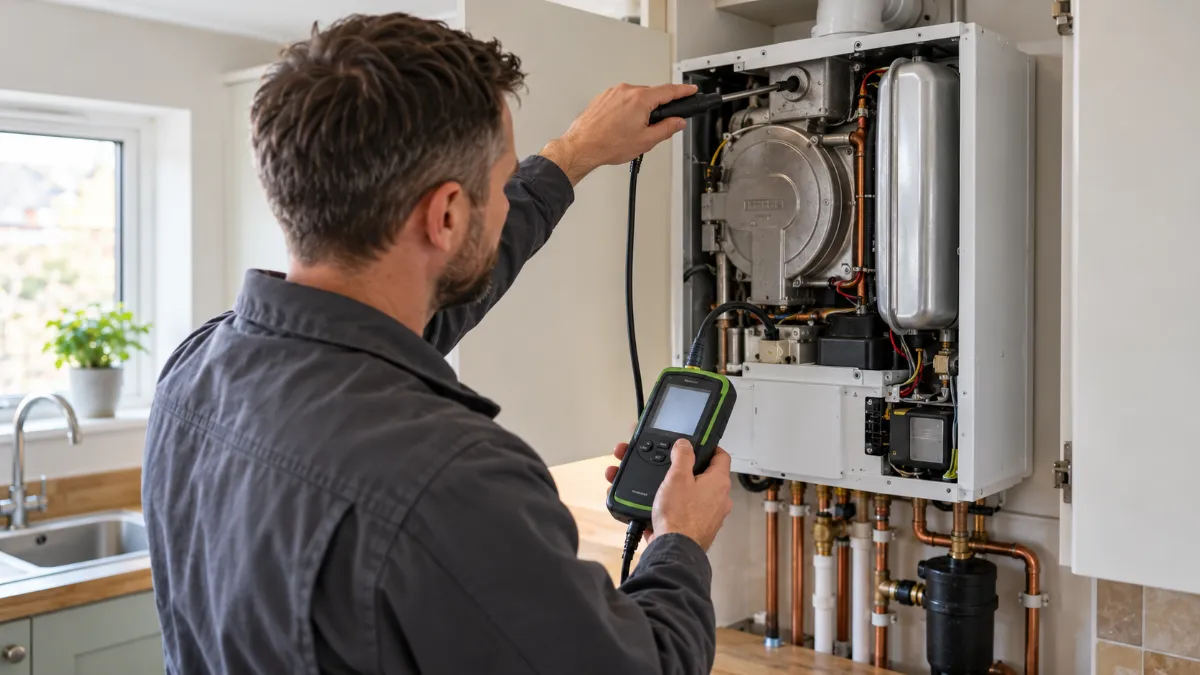
- A full service includes a flue gas analysis, safety device tests and a completed service record.
- If the engineer is only there for 10 minutes and never takes the casing off, it probably isn’t a full service.
- A gas safety check confirms the appliances and flues are safe on the day; a service is maintenance.
A standard service on a gas combi or system boiler usually takes around 30 to 60 minutes. It can take longer if the boiler hasn’t been serviced for a few years, if parts need cleaning or replacing, or if the engineer finds a fault.
It should be done once a year by a Gas Safe registered engineer. Most manufacturers require an annual service to keep the boiler’s warranty valid.
Why the time varies
| Situation | What to expect |
|---|---|
| Modern boiler, serviced every year | Usually at the quicker end |
| Not serviced for a few years | Longer. More cleaning, and parts may need replacing |
| Older boiler or awkward location (loft, cupboard) | Longer, because it’s harder to get at |
| Fault found during the service | Extra time for the repair, or a return visit if parts need ordering |
| Several gas appliances (e.g. a gas fire as well) | Extra time for each appliance |
What’s included in a boiler service
Exactly what’s done depends on the manufacturer’s service instructions for your boiler, but a proper gas boiler service normally covers:
Visual and safety checks
- checking the boiler is installed correctly and still meets the regulations
- checking the flue, inside and out, for damage, blockages and correct clearances
- checking ventilation where the boiler type needs it
- checking the condensate pipe and its route outside
Inside the boiler
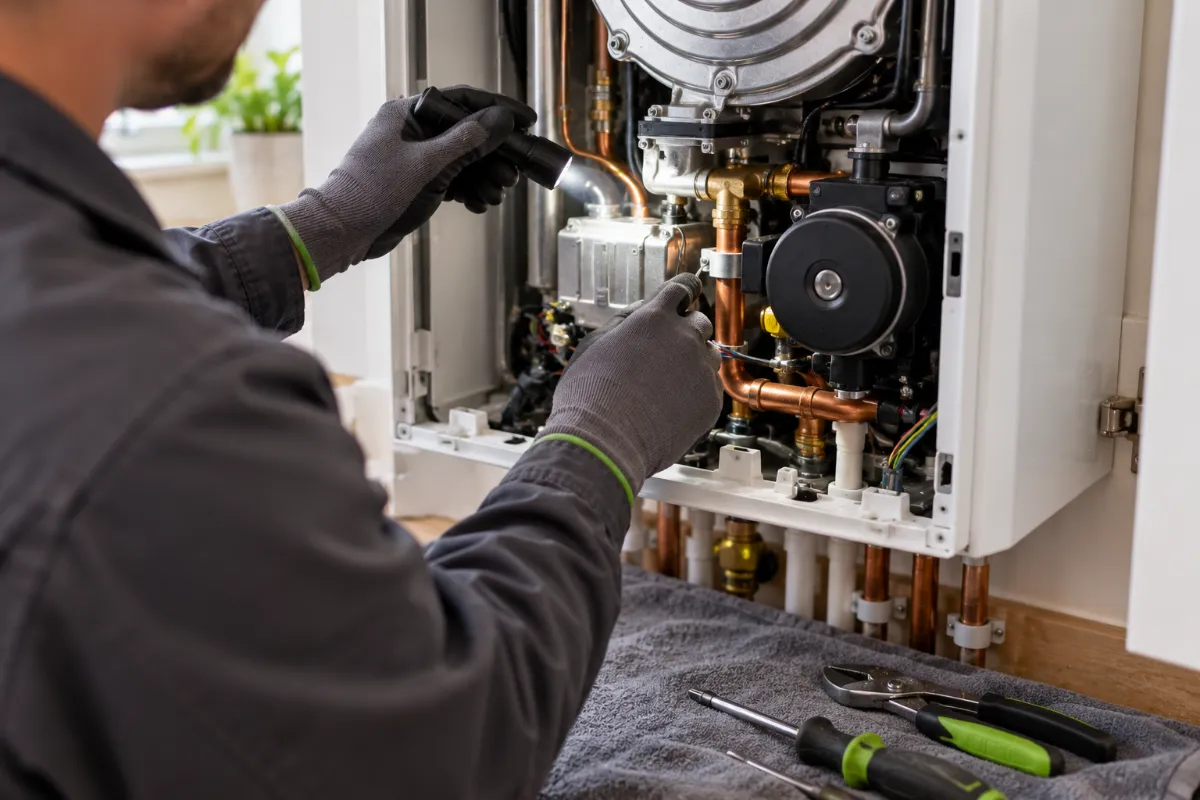
- removing the casing and inspecting the main components
- cleaning parts such as the burner, heat exchanger and condensate trap, where the manufacturer says to
- checking seals and gaskets, and replacing them if they’ve worn
- checking the fan, electrodes and electrical connections
Performance and safety tests
- a flue gas analysis with a combustion analyser, to check the boiler is burning gas cleanly and efficiently
- checking the gas pressure and gas rate against the manufacturer’s figures
- testing the safety devices, so the boiler shuts down properly if something goes wrong
- checking the system pressure and, where it’s part of the manufacturer’s routine, the expansion vessel charge
Paperwork
- filling in the service record (usually the Benchmark section of the boiler’s manual, or a digital record)
- writing down any defects, recommendations or unsafe situations found
If the engineer is only there for 10 minutes and never takes the casing off or uses an analyser, it probably wasn’t a full service.
Boiler service vs gas safety check
These two often get confused. A service is maintenance: cleaning, adjusting and replacing worn parts so the boiler works reliably and efficiently. A gas safety check confirms that the gas appliances and flues are safe on the day. It’s what landlords are legally required to have every year.
Many engineers can do both at the same visit. If you’re a landlord, ask for both so you get the service record and the Landlord Gas Safety Record together.
Landlords can read more in our guide to how often a gas safety certificate is needed.
How often should a boiler be serviced?
Once a year. Most manufacturers ask for this as a condition of the warranty, and Gas Safe Register also recommends having gas appliances serviced every year.
Many people book in late summer or early autumn, before the heating goes on for winter. That’s usually when it’s easiest to get an appointment, and any problems get found before it gets cold.
Check your warranty paperwork for your boiler’s first service date. It’s normally within 12 months of installation.
How to prepare for a boiler service
- Clear the space around the boiler. If it’s in a cupboard, empty enough room for the engineer to work.
- Make sure the loft is safe to get into if the boiler is up there, with a ladder, boarding and lighting.
- Have the boiler manual and warranty details handy if you can find them.
- Tell the engineer about any symptoms: unusual boiler noises, pressure dropping, hot water taking a while to come through, or fault codes.
- Expect the heating and hot water to be off for part of the visit.
What happens if the engineer finds a problem
A service will sometimes turn up worn parts or a fault. The engineer should explain what’s wrong, how urgent it is and what it’ll cost before doing any extra work. If something is unsafe, they may have to turn the boiler off until it’s repaired. This is part of the Gas Safe unsafe situations procedure, and it’s there to protect you.
Ready to book? Book an annual boiler service with a Gas Safe registered engineer.
A yearly service is also a good time to ask how your boiler is ageing. Our guide to how long boilers last explains what affects lifespan and the signs it may be nearing the end.
FAQs
Do I need to be home for a boiler service?
Someone over 18 needs to be there to let the engineer in and to be told about anything found during the service. Landlords can arrange for a tenant or agent to be there instead.
Can I use my heating straight after the service?
Yes. As long as no faults were found, the boiler will be back in use before the engineer leaves.
Does a service include power flushing or bleeding radiators?
No. Power flushing and system cleaning are separate jobs, priced separately. They’re usually recommended when the engineer sees signs of sludge, such as cold spots on radiators.

One Comment
Comments are closed.