Frozen Condensate Pipe? How to Thaw It Safely (and Stop It Happening Again)
Quick answer
If a condensing boiler stops working in freezing weather, the plastic condensate pipe outside is one of the first things to check. When it freezes, water backs up and the boiler locks out as a safety measure. Thawing the pipe with warm, not boiling, water or a hot water bottle may clear it.
- Let a boiled kettle cool for 10 to 15 minutes first, as boiling water can damage the plastic.
- Warm the exposed parts, such as the open end, bends and dips, then reset the boiler once as the manual describes.
- Don’t climb ladders on icy ground: call an engineer if the frozen section is above ground floor.
- Don’t remove the boiler casing. Work on a gas boiler should be left to a suitably qualified Gas Safe registered engineer.
- If you smell gas, don’t touch the boiler and call 0800 111 999.
If your condensing boiler stops working on a freezing morning, starts gurgling and has an external condensate pipe, a frozen condensate pipe is one of the first things to check. Where the pipe is safely reachable, you can often clear it yourself with warm (not boiling) water or a hot water bottle. If it’s still not working afterwards, it’s worth arranging a boiler repair.
This guide explains how to tell if it’s the condensate pipe, how to thaw it safely, how to restart the boiler, and what to change so it doesn’t happen every cold snap.
What the condensate pipe does
Modern gas and oil boilers are condensing boilers. They recover extra heat from the flue gases, and that process produces slightly acidic water, called condensate. The condensate runs out of the boiler through a plastic pipe (usually white or grey, around the thickness of a thumb or wider) into a drain, a gully or a soakaway.
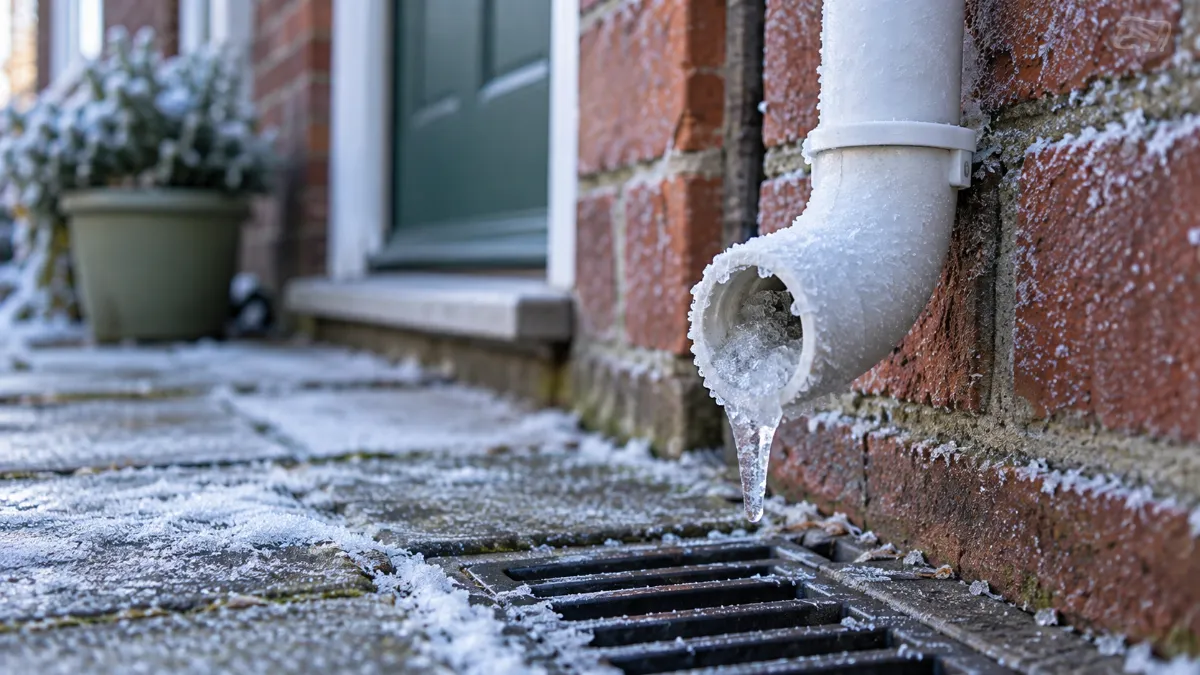
When that pipe runs outside, the water sitting in it can freeze in very cold weather. The ice blocks the pipe, the condensate backs up into the boiler, and the boiler shuts itself down to protect itself. Nothing is broken; the boiler is doing what it’s designed to do.
Signs your condensate pipe is frozen
- It’s below freezing outside, often after a cold night or several cold days in a row.
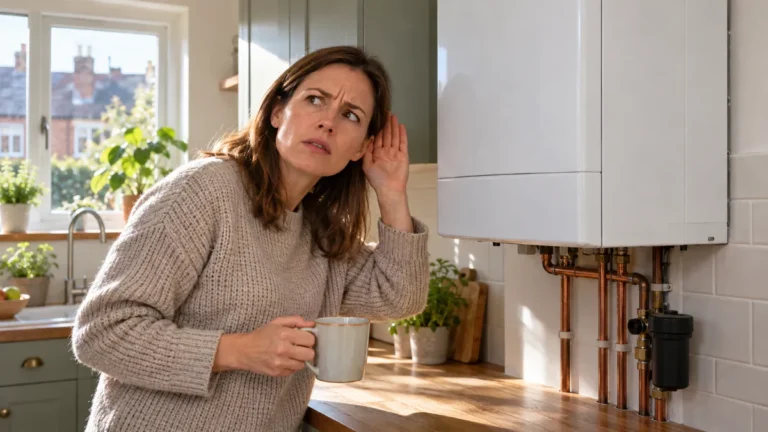
- The boiler makes a gurgling noise when it tries to start, then stops.
- The boiler keeps locking out and shows a fault code or flashing light.
- The condensate pipe has an outside section, especially a long or exposed one.
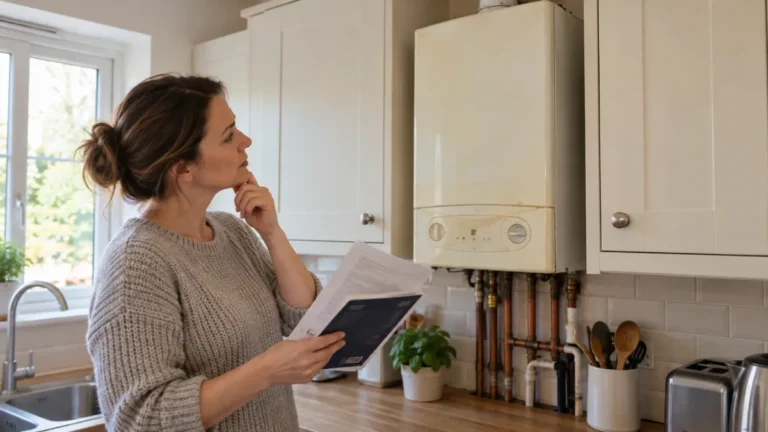
The fault code depends on the make and model. For example, Worcester Bosch says a frozen or blocked condensate pipe may be associated with an EA fault, while some models may show D5 or a slow-flashing blue light. Baxi says E133 or E28 can indicate a frozen condensate pipe. Fault codes can have more than one cause, so always check the instructions for your specific boiler.
Before you start: safety first
- Never use boiling water. Let a boiled kettle cool for 10 to 15 minutes first. Boiling water can crack or soften plastic pipe and joints.
- Don’t climb ladders onto icy ground to reach a high pipe. If the frozen part is above ground floor level, call a heating engineer instead.
- Watch your footing. Water you pour can refreeze on paths and steps, so clear or grit the area afterwards.
- Don’t remove the boiler casing or attempt internal repairs. Work on a gas boiler should be left to a suitably qualified Gas Safe registered engineer.
How to thaw a frozen condensate pipe, step by step
1. Find the pipe
Follow the plastic pipe from the bottom of the boiler to where it leaves the house and runs to a drain. Don’t confuse it with the copper pipes under the boiler (those carry gas and water) or with the pressure relief pipe, which is usually copper and ends in a short downturned spout outside.
If you are not sure which pipe is which, our guide to the pipes under a combi boiler shows how to tell the condensate pipe from the others.
2. Work out where the ice is
The blockage is most likely where the pipe is most exposed: the open end, a bend, an elbow or a dip where water sits. If you can see ice at the end, start there.
3. Warm the pipe gently
Use one of these:
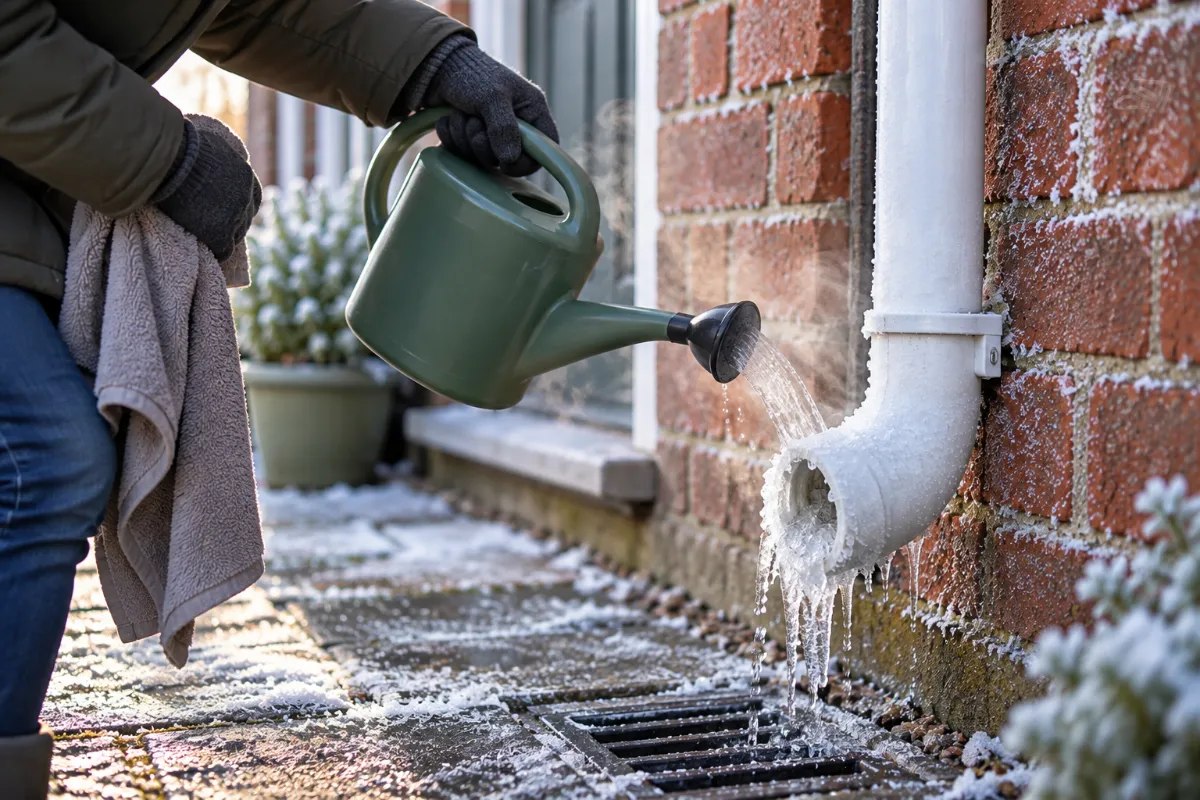
- Warm water: pour it slowly along the outside section from the top down, using a kettle or watering can. You may need several refills.
- A hot water bottle or microwavable heat pack: hold or tie it around the frozen section.
- A cloth soaked in warm water: wrap it around the bend or end of the pipe.
Keep going until water drips or flows freely out of the end of the pipe.
4. Restart the boiler
Once the pipe is clear, reset the boiler. On many models this is a reset button or a dial turned to the reset position, but the exact steps vary, so follow your boiler’s user manual or the manufacturer’s website. The boiler should then fire up normally. If the fault code comes back straight away, the pipe may still be partly blocked, or there may be a different fault.
When to call a heating engineer
- The pipe is out of reach or above ground floor level.
- You’ve thawed the pipe but the boiler still won’t restart or keeps locking out.
- The pipe looks cracked, split or has pulled apart at a joint.
- It freezes every time there’s a cold snap.
- You smell gas. In that case, don’t touch the boiler: call the National Gas Emergency Service on 0800 111 999.
If the boiler still won’t run, arrange boiler repairs with a local engineer. If your boiler is losing pressure as well as locking out, see why your boiler keeps losing pressure.
How to stop the condensate pipe freezing again
If your pipe freezes every winter, it’s worth having the way it’s routed and protected looked at. Common fixes a heating engineer can look at:
- Route it inside. Industry guidance (BS 6798) says condensate pipes should run internally wherever possible, for example to an internal waste pipe or stack.
- Increase the pipe size outside. Industry guidance says external condensate pipework should be at least 30mm internal diameter, typically 32mm outside diameter. Narrower pipe outside freezes more easily.
- Keep outside runs short. Worcester Bosch, for example, says external condensate runs on its gas and oil boilers should be no more than 3 metres, and insulated unless certain conditions are met.
- Insulate it. Waterproof, UV-resistant lagging on the outside section helps a lot. Ordinary indoor foam lagging soaks up water and doesn’t last.
- Give it a steep fall and few bends. Water that drains away quickly can’t sit and freeze.
- Trace heating. On awkward runs, a low-power heating cable can be fitted to keep the pipe above freezing. This needs fitting properly by a qualified installer.
A good time to ask about any of these is your annual boiler service, ideally before winter. You can read what a boiler service includes in our separate guide.
Why it happens in Greater Manchester
Homes across Greater Manchester can experience frozen condensate pipes during prolonged freezing weather. External sections are particularly vulnerable where the pipe is long, narrow, poorly insulated or exposed to cold winds. North-facing walls, shaded side passages and exposed elevations can also leave external pipework more susceptible to freezing.
Local councils give the same advice to their tenants. Wigan Council, for example, tells residents to use hot (not boiling) water or a hot water bottle on the end of the pipe and then reset the boiler.
If thawing the pipe doesn’t get the boiler going again, our guide to what to check when your boiler is not working covers the other safe checks to try.
In a cold snap, keeping the heating on low helps reduce the risk of frozen pipes. Our guide on whether it’s cheaper to leave the heating on low all day covers when that makes sense and when a timer saves more.
FAQs
Can I just keep resetting the boiler until it works?
No. If the pipe is still frozen, the boiler will lock out again. Repeated resets won’t clear the ice. Thaw the pipe first, then reset once.
Is a frozen condensate pipe dangerous?
Not in itself. The boiler shuts down as a safety measure, so you lose heating and hot water rather than facing a hazard. The main risks are slipping on ice or scalding yourself with water that’s too hot.
Can I use a hairdryer or heat gun?
Avoid using mains electrical appliances outdoors in wet conditions. A heat gun can also melt plastic pipe. Warm water, a hot water bottle or a heat pack is safer.
Should I leave the heating on low to stop it freezing?
Some people find running the heating on a low, steady setting during very cold spells helps, because warm condensate flows through the pipe more often. It isn’t guaranteed to stop a badly installed pipe freezing, and it uses more energy, so a proper fix (wider, shorter, insulated or internal pipe) is the long-term answer.
Does my boiler have a condensate pipe?
If it’s a gas or LPG boiler installed since 2005, or an oil boiler installed since 2007, it’s very likely to be a condensing boiler and therefore have a condensate drain. Older non-condensing boilers don’t have one.
Will a new boiler stop the problem?
Not on its own. The pipework matters more than the boiler. If you’re getting a new boiler installation, ask the installer how the condensate pipe will be routed and protected.
Boiler still not working after thawing the pipe? Tell us what you need for a free, no-obligation quote, and a local heating engineer will get back to you.