How Long Do Boilers Last, and When Should You Replace Yours?
Quick answer
A well-maintained boiler should generally last somewhere between 10 and 15 years, and Worcester Bosch and Baxi both base that estimate on annual servicing. Age alone doesn’t mean a boiler has to come out, though: whether it’s safe comes down to its condition, not its age.
- Ideal says a well-maintained heat-only boiler can generally last between 15 and 20 years.
- Sludge, poor installation and running at the wrong pressure can all shorten a boiler’s life.
- It may be worth comparing replacement if the boiler is 10 to 15 years old or more and has needed several repairs recently.
- Work on a gas boiler should be left to a suitably qualified Gas Safe registered engineer.
Boiler manufacturers generally say a well-maintained boiler should last somewhere between 10 and 15 years, and some keep going well beyond that. Age alone doesn’t mean a boiler has to come out, though. What matters more is how reliable it still is, whether parts can be found, how efficiently it runs, and whether it still suits your home. When it’s time, a straightforward new boiler installation is usually the simplest option.
This guide covers what affects a boiler’s lifespan, how to find out how old yours is, the signs that it may be nearing the end, and how to weigh up repairing it against replacing it.
How long does a boiler last?
Worcester Bosch and Baxi both put the typical lifespan of a well-maintained, annually serviced boiler at around 10 to 15 years. Worcester Bosch adds that some boilers keep working for 20 years or more, but warns that this can come with higher repair costs and less reliable performance. Ideal says a well-maintained heat-only (regular) boiler can generally last between 15 and 20 years.
So there’s no fixed expiry date. A boiler that has been serviced every year, sits on a clean system and was installed properly may comfortably outlast one that has been neglected. In March 2026, HomeServe estimated that around 5.1 million UK households were running a boiler more than 10 years old, including about 1.3 million with one over 20 years old.
What affects how long a boiler lasts
- Annual servicing. A yearly service lets an engineer check the boiler is working safely, clean key parts and spot developing faults before they turn into breakdowns. Both Worcester Bosch and Baxi make annual servicing part of their 10 to 15 year estimate.
- The condition of the heating system. Sludge and magnetite (black iron oxide from corroding radiators and pipes) can circulate through the system and build up in the boiler. Cleaning the system when a new boiler goes in, keeping the inhibitor topped up and fitting a magnetic filter all help protect it.
- Installation quality. Ideal notes that poor installation can lead to frequent breakdowns and a shorter life. A boiler that is the wrong size for the home, or fitted without the system being cleaned, may struggle from the start.
- Build quality and model. Worcester Bosch says the quality of the boiler and how well it is looked after matter more than the boiler type. It says there’s no connection between boiler type and lifespan.
- Water quality. Hard water can leave limescale on the parts that heat your hot water. Most homes in Greater Manchester get soft water, so this is generally less of a concern here than in hard-water areas (see the local section below).
- Pressure and general care. Running a sealed system at the wrong pressure, or ignoring small leaks and repeated pressure loss, can put extra strain on components over time.
How to find out how old your boiler is
If you didn’t have the boiler fitted yourself, there are a few ways to work out its age:
- Check the paperwork. New boilers come with a Benchmark commissioning checklist, usually at the back of the installation manual. It records the installation date and, on later pages, each service.
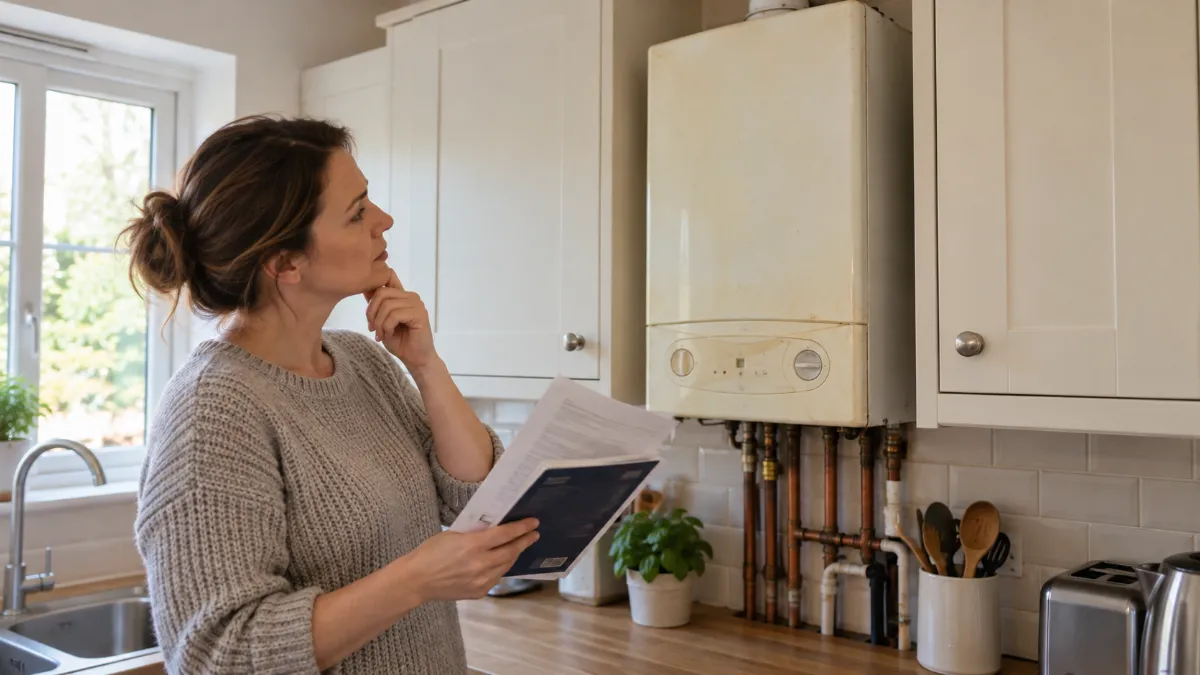
- Look at the data badge. The boiler’s model and serial number are on a label, often behind or under the front cover panel or on a pull-down flap. The manufacturer’s customer support team can usually tell you the manufacture date from the serial number.
- Ask at the next service. An engineer can usually tell you roughly how old a boiler is from its model and serial number, and whether that model is still supported.
- Check your property paperwork. If you bought the house, the boiler’s installation may be listed in the documents handed over at the time, including the Building Regulations compliance certificate issued when a boiler is installed.
The fuel type can also give you a clue. The Energy Saving Trust says gas and LPG boilers installed since 2005, and oil boilers installed since 2007, are likely to be condensing boilers. A gas boiler with no plastic condensate pipe running to a drain is likely to be older than that.
Signs your boiler may be nearing the end
None of these signs on its own means a boiler has to be replaced. Several of them together, on an older boiler, are worth taking seriously.
| Sign | What it can mean | What to do |
|---|---|---|
| More frequent breakdowns | Several parts may be wearing out at once | Keep a note of repairs and their cost, then compare that with replacing the boiler |
| Parts getting harder to find | The model may be discontinued, so repairs can take longer or cost more | Ask your engineer whether parts are still available for your model |
| Rising heating bills | The boiler may be running less efficiently than it used to | Check your usage first (weather and prices change too), then ask about efficiency at the next service |
| Radiators slow to heat or heating unevenly | Can be system sludge, trapped air or a struggling boiler | See our guide to radiators cold at the top or bottom before assuming the boiler is at fault |
| Repeated pressure loss | A leak in the system, or a worn part such as the expansion vessel or pressure relief valve | Work through our boiler losing pressure checklist |
| New or louder noises | Kettling, banging or whistling can point to limescale, sludge or a failing component | Read what different boiler noises mean |
| Not enough hot water for your household | The boiler may no longer suit the home, for example after an extension or an extra bathroom | Ask whether a different boiler type or size would suit you better |
Some warning signs need action straight away, whatever the boiler’s age. If you smell gas, or a carbon monoxide alarm goes off, turn off the gas at the meter if it is safe to do so, open doors and windows, don’t use electrical switches or naked flames, leave the property and call the National Gas Emergency Service on 0800 111 999. If anyone has symptoms of carbon monoxide poisoning, such as headaches, dizziness or nausea, get urgent medical advice.
Is an old boiler unsafe?
Not necessarily. An older boiler that has been serviced regularly and still passes its safety checks can carry on being used. Safety comes down to its condition, not its age. That’s why an annual service matters more as a boiler gets older.
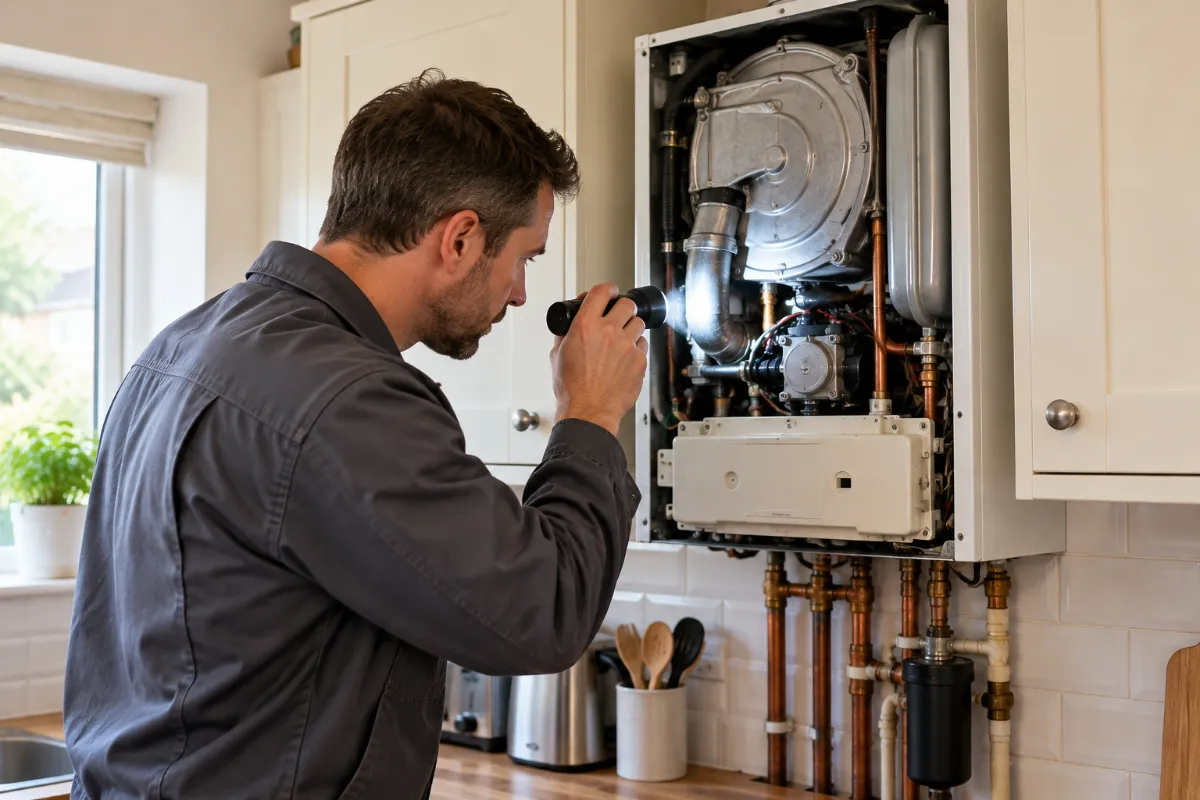
If an engineer finds a problem that makes an appliance unsafe, they will explain what they’ve found, may ask your permission to turn it off, and will tell you what needs to happen before it can be used again. Work on a gas boiler should be left to a suitably qualified Gas Safe registered engineer.
Repair or replace?
There’s no single age or repair bill at which replacing becomes the right answer. It may be worth comparing the cost of a repair with the cost of replacement when:
- the boiler is 10 to 15 years old or more and has needed several repairs recently
- a major part has failed, such as the heat exchanger, printed circuit board (PCB) or fan
- parts for your model are hard to source or no longer made
- it is out of its manufacturer’s warranty
- it no longer meets your household’s heating or hot water needs
Repairing usually makes more sense when the boiler is younger, has been reliable, the fault is a one-off and parts are readily available. A good engineer will tell you honestly which side of the line your boiler sits on, and why.
If you’re leaning towards replacement, our guide to how much a new boiler costs in Manchester covers typical price ranges.
What’s different about a new boiler
A replacement isn’t just a newer version of the old boiler. In England, Boiler Plus rules, in force since April 2018, mean every new or replacement gas boiler must have an ErP efficiency rating of at least 92% and be fitted with time and temperature controls. Combi boiler installations also need one extra energy-saving measure, such as weather compensation, load compensation, flue gas heat recovery, or smart controls with automation and optimisation.
A new boiler will also come with a manufacturer’s warranty. Its length varies by brand and model, and usually depends on the boiler being registered and serviced every year in line with the manufacturer’s terms. Our boiler brands guide covers the main manufacturers.
Replacing the boiler is also a natural point to ask whether a different set-up would suit you better, for example swapping a regular boiler and tanks for a combi, or keeping a hot water cylinder for a larger household. If you’re interested in a low-carbon option, a heat pump may be worth considering, and some homes are eligible for a grant through the Boiler Upgrade Scheme.
How to help your boiler last longer
- Book an annual boiler service with a Gas Safe registered engineer, and keep the record. Our guide to what’s included in a boiler service explains what happens.
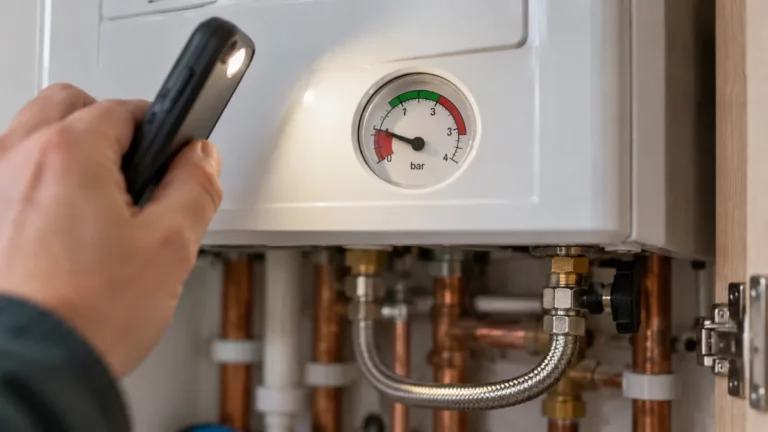
- Keep an eye on the pressure gauge on a sealed system, and follow your boiler manual for the normal range for your model.
- Bleed radiators if they’re cold at the top, and mention it at the service if they keep needing it.
- Look after the condensate pipe in cold weather. See our guide to a frozen condensate pipe.
- Ask about system protection, such as a magnetic filter and inhibitor levels, especially if the system hasn’t been cleaned in years.
- Don’t ignore small faults. A dripping pipe or a boiler that needs regular resetting is easier to deal with early.
Boiler age and Greater Manchester homes
Greater Manchester has a wide mix of housing, from Victorian and Edwardian terraces to inter-war semis, post-war estates and modern flats. The age of the boiler matters, but so does the system it’s connected to. An older home may still have original pipework or radiators, and those can affect how well any boiler performs.
United Utilities says most of the water it supplies comes from upland reservoirs and is soft or very soft, although some parts of the region are supplied with harder borehole water, usually blended. Soft water means limescale is generally less of a concern than in hard-water areas, but it doesn’t stop sludge and corrosion building up in the heating system itself, so servicing and system protection still matter.
If an older boiler has stopped working, our guide to the checks to try when your boiler is not working can help before you call an engineer.
Sludge in an older system doesn’t always mean the boiler needs replacing. Our guide to what a power flush involves covers when cleaning the system may help and when replacement may make more sense.
FAQs
How long should a combi boiler last?
Generally the same as other boiler types, around 10 to 15 years with annual servicing. Worcester Bosch says there’s no connection between boiler type and lifespan. Maintenance, installation and build quality matter more.
Is a 15-year-old boiler too old?
Not automatically. If it has been serviced every year, is reliable and parts are still available, it may keep going for some time. Once repairs become frequent, or a major part fails, it may be worth comparing the cost of repair with replacement.
Does a boiler service make it last longer?
Regular servicing helps a boiler run safely and efficiently and can catch developing faults early. Manufacturers’ lifespan estimates assume annual servicing, and many boiler warranties require it in line with the manufacturer’s terms.
Can I still replace my gas boiler with a new gas boiler?
Yes. Homeowners can currently replace an existing gas boiler with a new one. In England it must meet the Boiler Plus standards, including a minimum ErP efficiency of 92% and the right controls. It’s still worth asking about alternatives such as heat pumps when you get quotes.
How do I know if my boiler is a condensing boiler?
Condensing boilers have a plastic condensate pipe, usually white or grey, that carries water to a drain. The Energy Saving Trust says gas and LPG boilers installed since 2005, and oil boilers since 2007, are likely to be condensing.
Will a new boiler lower my bills?
It can, especially if you’re replacing an old, inefficient boiler. How much you save depends on how efficient the old boiler was, the size and insulation of your home, your controls and how you use your heating. Replacing a boiler that is already fairly efficient will save less.
Wondering if your boiler is due for replacement? Find out more about new boiler installation, or tell us what you need for a free, no-obligation quote, and a local heating engineer will get back to you.