Combi vs System vs Regular Boiler: Which Suits Your Home?
Quick answer
A combi often suits a smaller home with one bathroom, because it heats water directly from the mains with no cylinder or loft tanks. A system boiler with a hot water cylinder often suits a home with two or more bathrooms. A regular boiler may still be the better fit for some older systems or homes with low mains water pressure.
- Combi: needs the least space, but flow drops when two or more outlets are used at once.
- System: no loft tank, and several taps and showers can run together until the stored water runs out.
- Regular: needs room for a cylinder and loft tanks, and suits like-for-like replacements.
- Work on a gas boiler should be left to a suitably qualified Gas Safe registered engineer.
If you’re replacing a boiler, the first big decision is the type: a combi, a system or a regular (also called conventional or heat-only) boiler. All three can be efficient, modern condensing boilers. The real difference is how they give you hot water, how much space they need, and how well they cope when more than one tap or shower is running.
In short: a combi often suits a smaller home with one bathroom. A system boiler with a hot water cylinder often suits a home with two or more bathrooms. A regular boiler may still be the better fit for some older systems or homes with low mains water pressure. This guide explains why, and what to ask before you choose.
How each type of boiler works
Combi boiler
A combination (combi) boiler heats your radiators and heats water directly from the mains when you turn on a hot tap. There’s no hot water cylinder and no cold water tank in the loft. The Energy Saving Trust describes combis as heating water on demand without a separate hot water tank.
System boiler
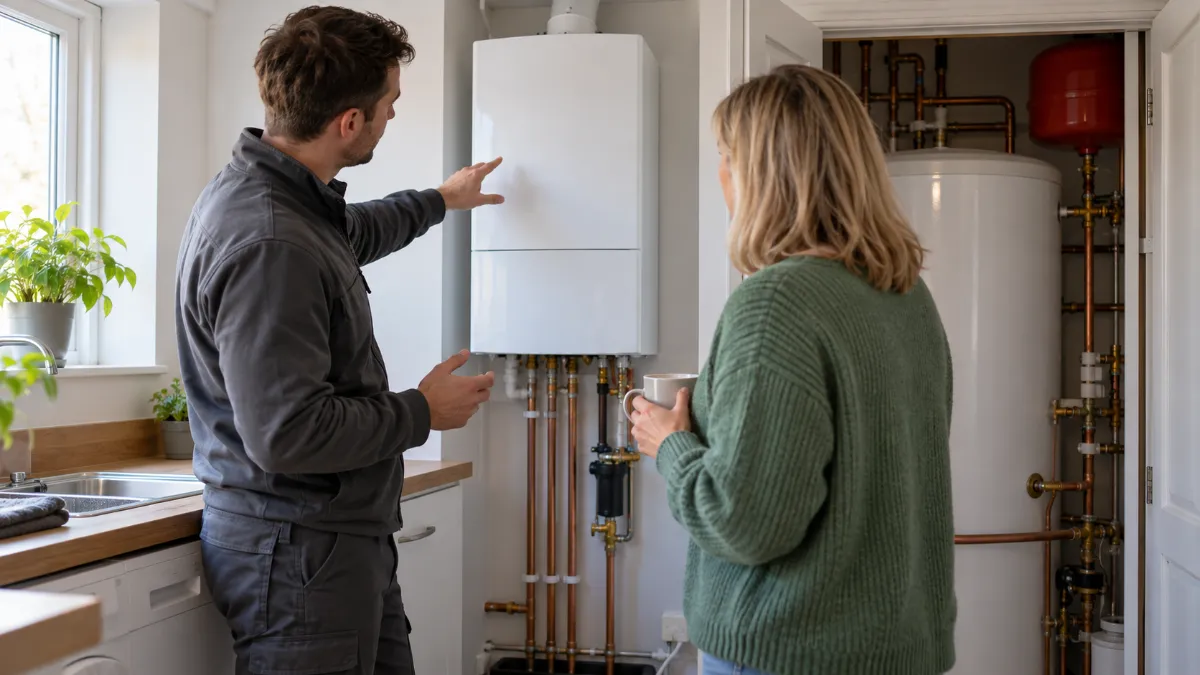
A system boiler works with a hot water cylinder, usually an unvented (mains pressure) one, but doesn’t need a cold water tank in the loft. Many of the heating system’s parts, such as the pump and expansion vessel, are built into the boiler itself. Which? describes it as needing a cylinder but not a cold water tank.
Regular (conventional) boiler
A regular boiler heats the radiators and a separate hot water cylinder. It’s usually part of an open-vented system, fed by a cold water storage tank and a small feed and expansion tank, typically in the loft. The cylinder is heated at set times by a programmer, so you have a store of hot water ready to use.
Combi vs system vs regular boiler at a glance
Combi
- Hot water cylinder
- No
- Tanks in the loft
- No
- Hot water
- On demand, from the mains
- Several showers at once
- Flow drops when two or more outlets are used
- Space needed
- Least
- Often suits
- Flats and smaller homes with one bathroom
System
- Hot water cylinder
- Yes
- Tanks in the loft
- No
- Hot water
- Stored, ready to use
- Several showers at once
- Usually copes well, until the stored water runs out
- Space needed
- Room for a cylinder
- Often suits
- Homes with two or more bathrooms
Regular
- Hot water cylinder
- Yes
- Tanks in the loft
- Yes (cold water and feed & expansion)
- Hot water
- Stored, ready to use
- Several showers at once
- Usually copes well, until the stored water runs out
- Space needed
- Room for a cylinder and loft tanks
- Often suits
- Older open-vented systems, or homes with low mains pressure
When a combi boiler is a good choice
Which? suggests combis for smaller homes and flats with one bathroom and lower hot water demand. The main advantages are:
- Space. With no cylinder or loft tanks, you can free up an airing cupboard and clear the loft, which can help if you’re planning a loft conversion.
- Hot water whenever you want it. You don’t need to wait for a cylinder to heat up, and you can’t "run out" of stored hot water.
- Less heat wasted from storage. The Energy Saving Trust notes that combis can be more efficient overall, because they avoid the heat lost from a stored cylinder.
The limits are worth knowing too. A combi relies on your mains water supply, so performance depends on your incoming water pressure and flow rate. And as Which? points out, the flow reduces when the boiler is trying to supply hot water to two or more places at once. If two people regularly want to shower at the same time, that can be frustrating.
When a system boiler makes more sense
A system boiler with a hot water cylinder suits busier households, typically with two or more bathrooms. Because there’s a tank of hot water already heated, several taps and showers can run at the same time. And with no cold water tank in the loft, there are fewer parts up there to freeze or leak.
The trade-offs: you need room for the cylinder, you can run out of hot water during heavy use until the cylinder reheats, and some heat is lost from the stored water. System boilers are usually paired with an unvented hot water cylinder. Installing one is notifiable building work under Part G3 of the Building Regulations, and it should only be fitted by an installer holding the correct G3 qualification (the APHC trade association sets this out for its members). Unvented cylinders should also be serviced in line with the manufacturer’s instructions.
When a regular boiler is still the right fit
Regular boilers get overlooked, but they still have a place. They can suit:
- Homes with low mains water pressure, because the hot water is fed from a stored tank rather than straight from the mains.
- Older open-vented heating systems, where switching to a sealed, pressurised system could put strain on old pipework and radiators. Heatable notes that system boilers may not be suitable for very old heating systems.
- Like-for-like replacements, where you’re happy with your current hot water and simply want a more efficient boiler without moving or removing tanks.
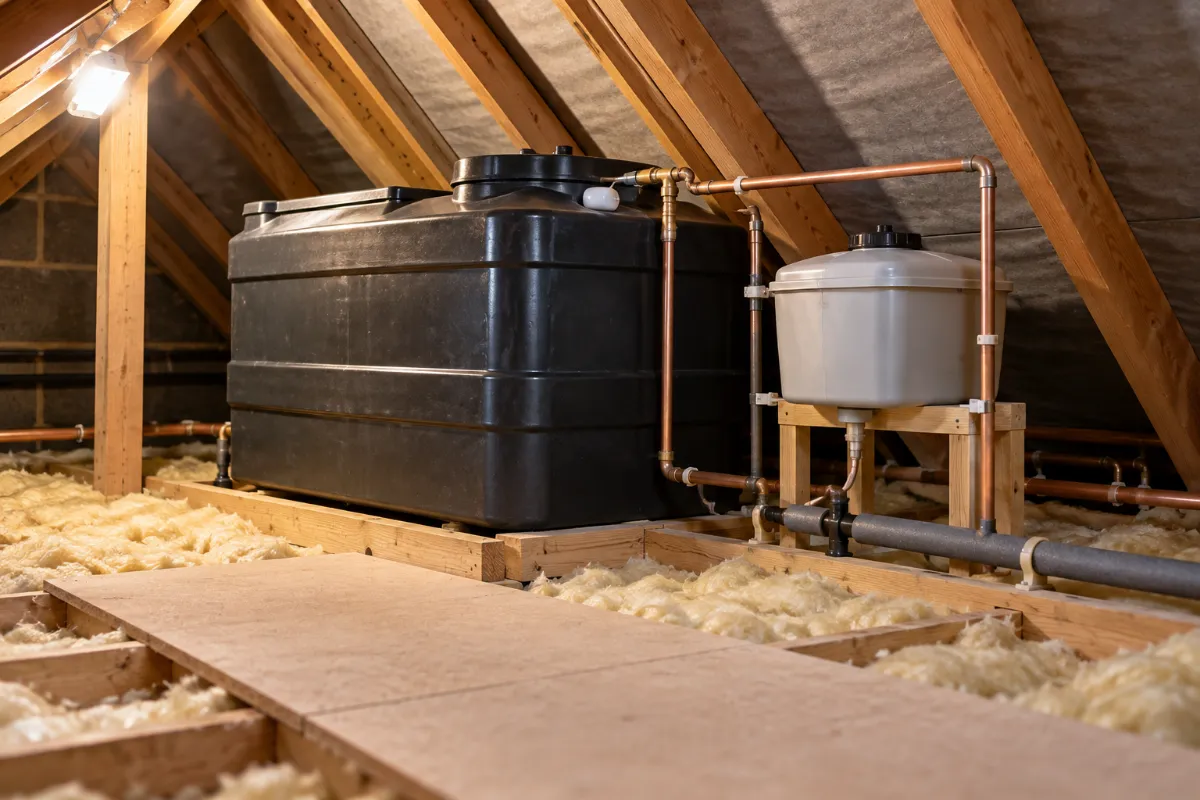
The downside is space: you need room for the cylinder and the tanks in the loft, and Which? notes that you have to wait for the cylinder to heat if you’ve used up the stored water.
Five questions to help you choose
- How many bathrooms do you have, and how many people shower at the same time? One bathroom usually points towards a combi. Two or more, with showers used at the same time, usually points towards stored hot water.
- What’s your mains water pressure and flow rate like? A combi can only deliver what the mains supplies. Ask your installer to measure both before recommending a combi.
- Do you have space for a cylinder, and do you want the loft back? If space is tight, a combi wins. If you have an airing cupboard you’re happy to keep, a cylinder is less of a problem.
- What showers do you have? Worcester Bosch advises that pump-assisted power showers were designed for low-pressure systems and may not be suitable with a combi. A mains pressure mixer or thermostatic shower is normally used instead.
- Might you want a heat pump later? Heat pumps don’t give instant hot water like a combi, so they usually need a hot water cylinder. Baxi points this out in its heat pump guidance. If an air source heat pump is on your radar, keeping your airing cupboard space may make a future switch easier.
Switching from one type to another
Changing type is possible, but it’s more work than a like-for-like swap. Turning a regular system into a combi usually means removing the cylinder and loft tanks, altering pipework and, often, changing the shower. Moving to a sealed system can also expose weak spots in old radiators and pipework, so a good installer will check the system first and may recommend cleaning it.
A conversion usually costs more than a straight replacement. As a rough guide only, 2026 UK average prices are typically £1,800 to £3,500 for a like-for-like combi swap and around £3,000 to £5,700 for a conversion, depending on the home and the work involved. See our guide on how much a new boiler costs in Manchester for more detail, and always get a written quote for your own home.
What about storage combis?
A storage combi has a small hot water store built into the boiler. Which? describes it as combining some benefits of a combi and a system boiler, giving on-demand hot water with a store that can supply more than one outlet. They take up more room than a standard combi and there are fewer models to choose from, but they’re worth asking about if you’re stuck between the two.
Choosing a boiler type in Greater Manchester homes
Greater Manchester has a wide mix of housing, from Victorian and Edwardian terraces to inter-war semis, larger detached homes and modern flats. That mix means there’s no single "right" boiler for the area. A one-bathroom terrace or flat and a four-bedroom semi with an en suite will often need very different set-ups.
Mains water across most of Greater Manchester is supplied by United Utilities, but pressure and flow can still vary from one property to another. That’s why it’s worth having your flow rate measured at your own home before deciding on a combi, rather than relying on what neighbours have.
If you’re unsure, a heating engineer can look at your hot water use, your pipework and your space, and explain the options. You can also compare the boiler brands we cover, as most of the main manufacturers make combi, system and regular versions.
Whichever type you choose, how you run it affects your bills. Our guide on whether it’s cheaper to leave the heating on low all day covers timers, thermostats and flow temperature.
FAQs
Which is the most efficient: combi, system or regular?
The type matters less than the boiler’s efficiency and controls. The Energy Saving Trust’s advice is simply that the best kind of boiler is an efficient one. Combis avoid heat lost from a stored cylinder, which can make them more efficient overall, while system and regular boilers are useful where you need lots of hot water at once.
Can a combi boiler run two showers at once?
It can supply more than one outlet, but the flow drops when two or more are running at the same time. If your household often needs two showers at once, a system boiler with a cylinder is usually the better fit.
Do I need a new shower if I switch to a combi?
Possibly. If you have a pumped power shower designed for a low-pressure system, Worcester Bosch advises that it may not be suitable with a combi. Ask your installer which shower will work with your new boiler.
Can I keep my cylinder and change only the boiler?
Yes, in many cases. If you have a regular boiler, a like-for-like replacement with a new regular boiler keeps your existing cylinder and tanks. Your installer should check the cylinder’s condition first, as an old or poorly insulated cylinder may be worth replacing at the same time.
Is a combi suitable if I want a heat pump later?
Heat pumps usually need a hot water cylinder, so removing the cylinder and airing cupboard now could mean finding space again later. If you’re eligible, the Boiler Upgrade Scheme can help towards the cost of a heat pump.
Does a system or regular boiler still need an annual service?
Yes. Every gas boiler should have an annual boiler service, and manufacturers usually require one to keep the warranty valid. Work on a gas boiler should be left to a suitably qualified Gas Safe registered engineer.
Not sure which boiler suits your home? Find out more about new boiler installation, or tell us what you need for a free, no-obligation quote, and a local heating engineer will get back to you.