Heat Pump Running Costs: Is Your Home Suitable?
Quick answer
Heat pump running costs depend mainly on how efficiently the system runs over the year. Electricity is roughly 3.3 times the price of gas per kWh, so in this guide’s example a heat pump needs a seasonal efficiency of roughly 2.8 or above to cost about the same to run as a gas boiler.
- In the worked example (10,000 kWh of heat, unit rates only), a gas boiler at 84% costs about £949.
- The same heat from a heat pump costs about £1,053 at SPF 2.5 and about £752 at SPF 3.5.
- Lower flow temperatures and weather compensation help a heat pump run more efficiently.
- Stopping gas use altogether removes the gas standing charge.
Two questions come up again and again when people look at replacing a gas boiler with a heat pump: will it cost more to run, and will it actually work in my house? The honest answer to both is “it depends”, but it depends on things you can find out before you commit.
This guide explains what decides a heat pump’s running costs, works through a simple comparison with a gas boiler using current price cap rates, and covers the practical checks that show whether your home is suitable.
Why heat pump running costs depend on efficiency
A gas boiler burns gas to make heat. A heat pump uses electricity to move heat from the outside air (or the ground) into your heating system. Because it moves heat rather than making it, it can deliver several units of heat for every unit of electricity it uses. The Energy Saving Trust describes heat pumps as more than three times more efficient than a gas or oil boiler.
That efficiency matters because electricity costs much more per kWh than gas. Under Ofgem’s energy price cap for 1 October to 31 December 2026, the average GB direct debit rates are 26.32p per kWh for electricity and 7.97p per kWh for gas. Electricity is roughly 3.3 times the price of gas per kWh, so a heat pump has to run efficiently to match or beat a boiler on cost.
The figure to look at is the seasonal efficiency: how much heat the system delivers over a whole year compared with the electricity it uses. You may see it called SCOP (seasonal coefficient of performance) on product data, or SPF (seasonal performance factor) for a whole installed system. An SPF of 3 means 3 kWh of heat for every 1 kWh of electricity.
A simple running cost comparison
The table below shows what it would cost to deliver 10,000 kWh of heat (a round number for illustration, not a typical home’s usage) at the October to December 2026 price cap unit rates. It leaves out standing charges and assumes a standard single-rate electricity tariff. Actual annual costs also depend on your hot water demand, any immersion heater use and how you heat your home.
| Heating system | Efficiency assumed | Energy bought | Approx. cost (unit rates only) |
|---|---|---|---|
| Gas boiler | 84% | 11,905 kWh gas | £949 |
| Heat pump | SPF 2.5 | 4,000 kWh electricity | £1,053 |
| Heat pump | SPF 2.93 | 3,413 kWh electricity | £898 |
| Heat pump | SPF 3.5 | 2,857 kWh electricity | £752 |
| Heat pump | SPF 4.0 | 2,500 kWh electricity | £658 |
Rough illustration only, using average GB direct debit unit rates under the Ofgem price cap for 1 October to 31 December 2026. Rates vary by region, supplier, tariff and payment method, and change every three months.
The 84% boiler figure and the 2.93 heat pump figure both come from the government-funded Electrification of Heat demonstration project, which compared the air source heat pumps it monitored (averaging 293% efficiency) with a typical fossil fuel heating system efficiency of 84%. A newer, well set-up condensing boiler may do better than 84%, which would make the gas figure lower.
What the table shows:
- At these rates, a heat pump needs a seasonal efficiency of roughly 2.8 or above to cost about the same as gas in this example. Below that, it costs more; above it, less.
- The difference between a poorly performing and a well-designed system is large. In the example, an SPF of 2.5 costs about £400 more than an SPF of 4.0 for the same heat.
- The Energy Saving Trust says that on standard tariffs, heat pumps can cost slightly more to run than a new gas or oil boiler, but on a heat pump time-of-use tariff they can cost less.
Other things that change the sums
Your electricity tariff
Some suppliers offer tariffs designed for heat pumps or with cheaper electricity at certain times of day. A heat pump with a hot water cylinder can be set to heat water during cheaper periods. Compare tariffs carefully, as the savings depend on when your home uses its heat.
The gas standing charge
If you stop using gas completely and have the supply capped, you no longer pay the gas standing charge. At the October to December 2026 average of 29.68p a day, that works out at about £108 a year. If you keep gas for a hob or a gas fire, you’ll still pay it.
Oil and LPG homes
If your home is off the gas grid and uses oil or LPG, the comparison is different, because those fuels aren’t covered by the price cap and prices move around. Compare your own recent fuel bills against a heat pump estimate.
How you run it
Heat pumps work best running steadily at a lower temperature rather than in short, hot bursts like many boilers. Daikin’s efficiency advice says heat pumps perform best at lower flow temperatures, typically 35 to 45°C, and that weather compensation, which adjusts the water temperature to the weather outside, helps avoid unnecessarily high temperatures. Your installer should set this up and show you how to use the controls.
Is my home suitable for a heat pump?
A common worry is that heat pumps only suit new, highly insulated houses. The evidence doesn’t support that. The Electrification of Heat project installed 742 heat pumps in a wide range of homes, including Victorian mid-terraces, pre-war semis and 1960s flats, and found that no property type or age ruled out a successful installation. Older homes can take more design work, but that’s a design question rather than a reason to rule a heat pump out.
What matters is whether the system is designed for your particular home. These are the main things to look at.
1. Heat loss, and how the heat pump is sized
A heat pump should be sized around the property’s heat loss: how much heat the house loses on a cold day. An installer works this out from the size of each room, the walls, windows, floors and roof, and how well each part is insulated. Insulation and draught-proofing reduce heat loss, which can mean a smaller heat pump and lower running costs, but they aren’t a pass-or-fail test.
Under the MCS standard for heat pump pre-sale information, an MCS-certified installer must give you a performance estimate, including the proposed flow temperature, the expected seasonal performance factor and a high and low estimate of yearly energy use in kWh, which you can turn into running costs. The estimate is an indication of likely annual electricity use, not a guarantee. Actual use can differ significantly depending on the weather, the number of people in the home, the controls and how the system is used, and MCS guidance acknowledges that differences of around 25 to 30% can occur.
2. Your radiators
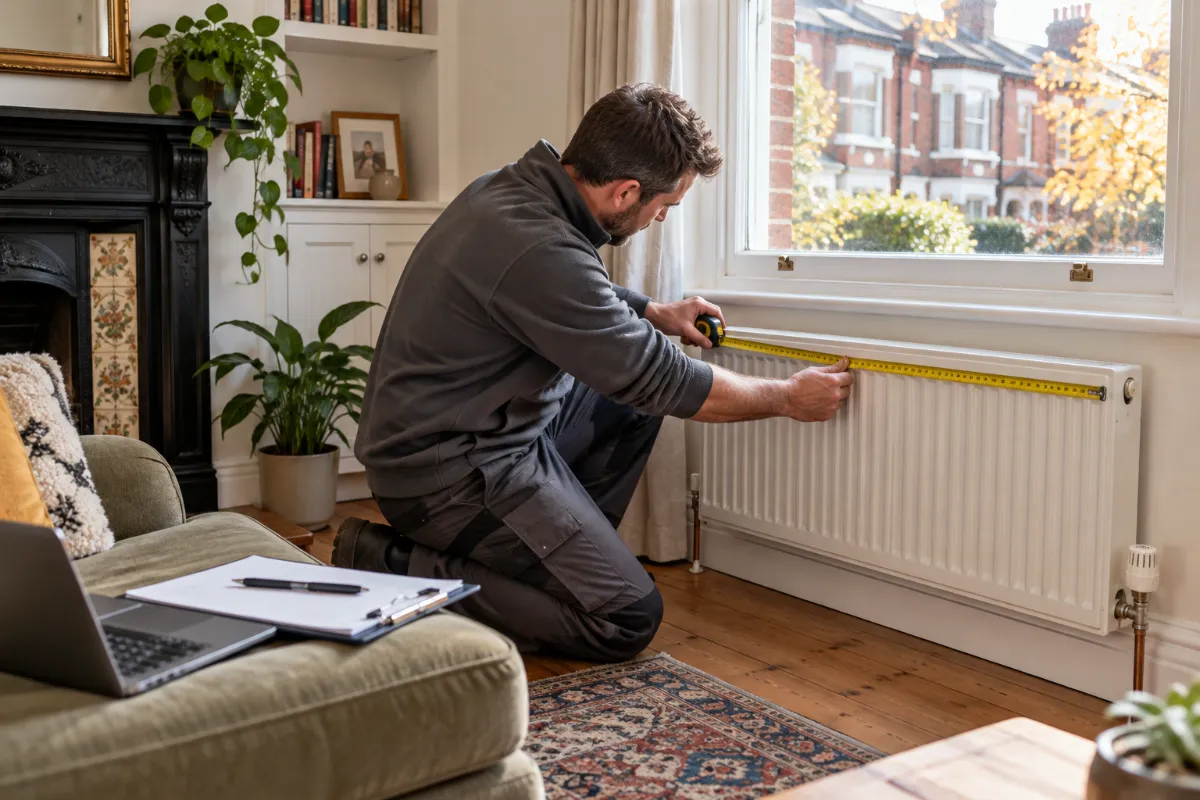
Because a heat pump runs at a lower water temperature, some radiators may need to be bigger to give out the same heat. A room-by-room heat loss calculation shows which ones, if any, need changing. It isn’t always necessary to replace every radiator. Underfloor heating also works well with heat pumps, as it runs at low temperatures; see our guide to wet vs electric underfloor heating.
3. Space for a hot water cylinder
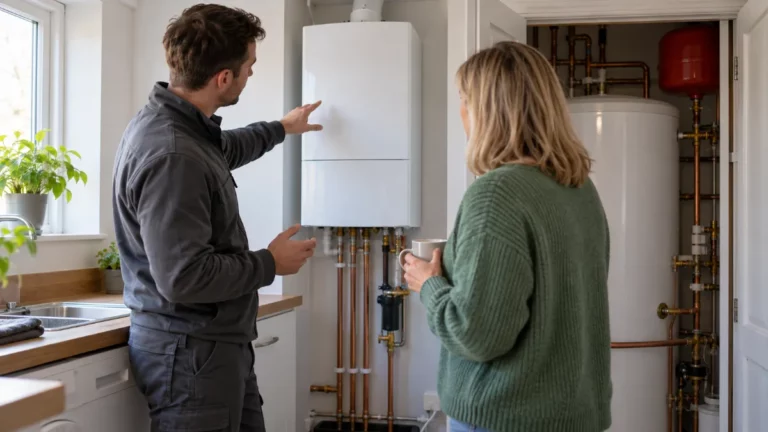
A standard heat pump doesn’t heat water on demand like a combi boiler, so you’ll usually need a hot water cylinder. The Energy Saving Trust says a cylinder can usually fit in a cupboard of at least 80cm by 80cm. If you have a combi now, finding room for a cylinder is often the biggest practical change. The cylinder is often an unvented one; our guide to unvented hot water cylinders explains how they work.
4. Room outside for the unit
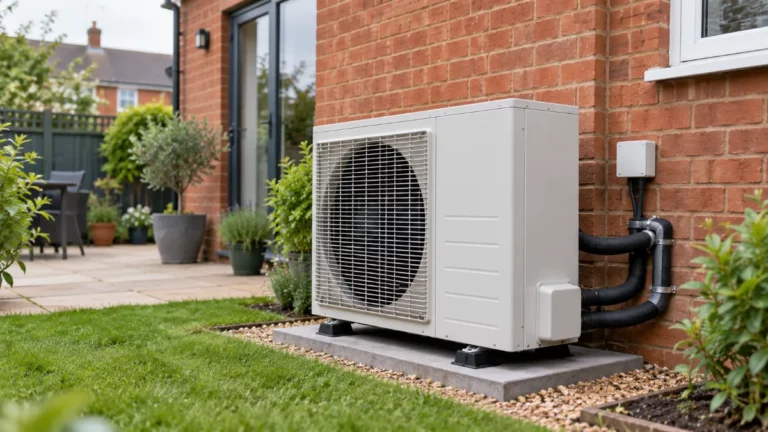
An air source heat pump needs a spot outside, on the ground or a wall, with space around it for air to flow. Rear gardens, side passages and yards can all work, depending on the space and the distance from neighbours’ windows.
5. Planning rules
In England, many air source heat pumps on houses count as permitted development, so they don’t need planning permission, provided they meet conditions. Since May 2025, the old rule that kept units at least 1 metre from the boundary has gone, and a detached house can have up to two units. The installation must pass the MCS noise assessment, including a 37dB(A) limit at the nearest neighbouring habitable room, and there are limits on unit size and position.
Extra restrictions apply to listed buildings and in conservation areas, for example on units fixed to a wall or roof facing a highway. Flats have separate limits, and you may also need permission from the freeholder. If your home is listed, in a conservation area or a flat, check with your council before work starts.
6. Your electricity supply
Your installer will check that your electrical supply and consumer unit can take the heat pump. They may also need to notify the network operator before connecting it.
What about the upfront cost and grants?
As a broad 2026 UK guide, an air source heat pump installation might cost around £8,000 to £14,000 before grants, although costs vary considerably depending on the property, the system design and any radiator or hot water cylinder upgrades needed. In England and Wales, the Boiler Upgrade Scheme gives £7,500 towards an eligible air-to-water or ground source heat pump, and eligible off-gas-grid properties replacing oil or LPG heating can currently get up to £9,000. An MCS-certified installer applies for the grant on your behalf and deducts it from the installation cost. Our guide to Boiler Upgrade Scheme eligibility explains who qualifies, and you can also see our grants and finance page.
Heat pumps in Greater Manchester homes
Greater Manchester has a broad mix of housing, from Victorian and Edwardian terraces to inter-war semis, post-war estates, flats and new builds. The Electrification of Heat findings suggest none of these types rules out a heat pump. What changes from house to house is the design: the heat loss, the radiators, where a cylinder can go and where the outdoor unit can sit.
A few points are worth checking early if they apply to your home:
- Terraces with small yards or no side access: where the outdoor unit can sit, and how far it is from neighbours’ windows.
- Homes with a combi boiler and no airing cupboard: where a hot water cylinder could fit.
- Homes in a conservation area or listed buildings: the extra planning restrictions above. Greater Manchester’s councils publish their conservation area lists online.
- Flats and maisonettes: the freeholder’s permission and the separate planning limits for flats.
Questions to ask an installer
- Will you carry out a room-by-room heat loss calculation, and can I see it?
- What flow temperature is the system designed for, and what seasonal performance factor do you expect?
- Which radiators, if any, will need replacing?
- Where will the cylinder and the outdoor unit go?
- Are you MCS certified, so the installation can qualify for the Boiler Upgrade Scheme?
- How will the controls and weather compensation be set up, and will you show me how to use them?
The Energy Saving Trust recommends getting quotes from at least three installers.
If you’re comparing how to run a heat pump and a boiler day to day, our guide on whether it’s cheaper to leave the heating on low all day explains why the answer is different for each.
Frequently asked questions
Is a heat pump cheaper to run than a gas boiler?
It can be, but it isn’t guaranteed. At the October to December 2026 price cap rates, a heat pump needs a seasonal efficiency of around 2.8 or better to match a boiler running at 84% in a simple comparison. A well-designed system on a suitable tariff can cost less to run; a poorly designed one can cost more.
Do I need to insulate my home before getting a heat pump?
Not necessarily. The heat pump should be sized around your home’s heat loss. Insulation reduces that heat loss, which can mean a smaller unit and lower bills, so it’s worth considering, but the Boiler Upgrade Scheme has accepted homes with outstanding insulation recommendations on their EPC since May 2024.
Will a heat pump work in an old Victorian terrace?
The Electrification of Heat project installed heat pumps in Victorian mid-terraces and found that no property type or age ruled out a successful installation. Older homes can need more design work, for example larger radiators, so a proper heat loss survey is important.
Do I have to replace all my radiators?
Not always. A room-by-room heat loss calculation shows whether each radiator can heat its room at the heat pump’s lower flow temperature. Some may need to be bigger; others can often stay.
Can I keep my combi boiler’s instant hot water?
A standard heat pump doesn’t heat water on demand, so you’ll usually need a hot water cylinder. Hot water comes from the stored supply instead of being heated as you use it.
What is a good SCOP or SPF for a heat pump?
The higher the better. In the simple comparison above, an SPF of about 2.8 breaks even with gas, 3.5 is noticeably cheaper and 4 is cheaper still. Ask your installer for the expected figure for your home and how they worked it out.
Thinking about a heat pump? Find out more about heat pump installation, or tell us what you need for a free, no-obligation quote, and a local heating engineer will get back to you.